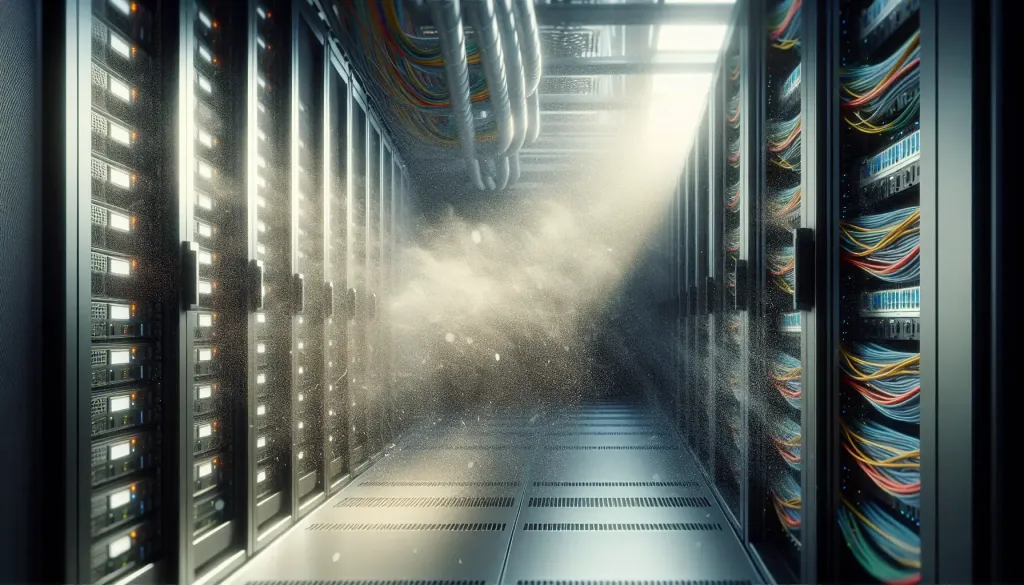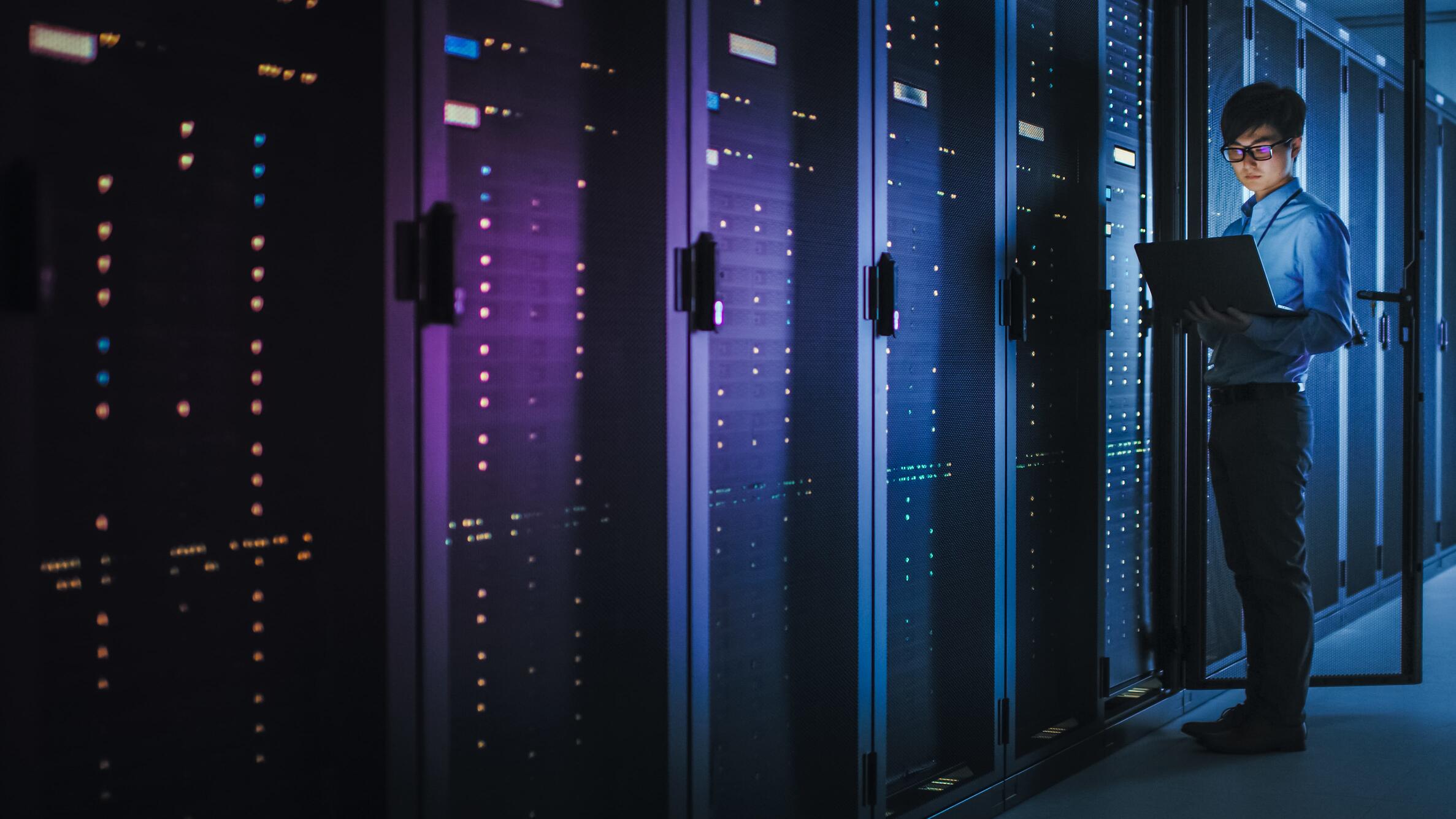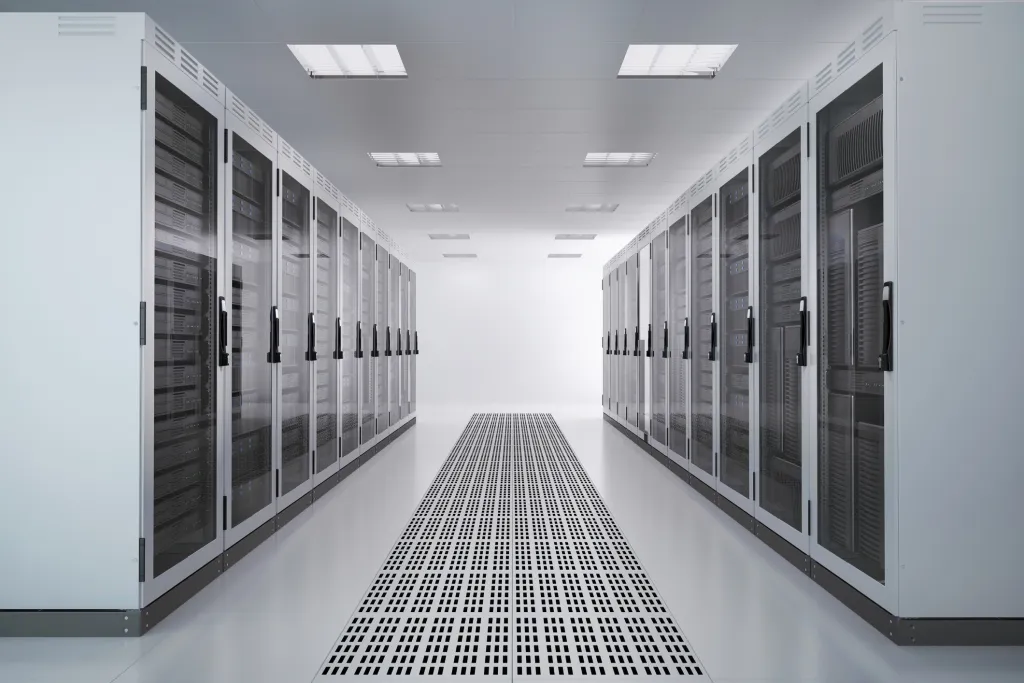


In today’s rapidly evolving technology, where data centers form the backbone of many industries, maintaining operational efficiency is critical. As companies strive for sustainability, data center cleaning is an often overlooked, essential factor. Dust and debris, no matter how small, can significantly impact equipment performance and overall energy consumption.
In this blog, we discuss the importance of regular data center cleaning and provide practical steps to keep equipment in top condition.
Why is cleanliness so important in data centers?
Even particles as small as half a micron can damage servers, storage units, and networking equipment. Keeping data centers clean not only improves operational performance but also promotes sustainable practices by reducing energy consumption and minimizing the risk of equipment failure.
Optimized Cooling Systems
Efficient cooling is a priority in every data center. Keeping server components clean improves cooling systems and prevents overheating. Dust buildup acts as an insulator, raising internal temperatures and forcing cooling systems to work harder. Keeping data centers clean allows cooling systems to operate efficiently, reducing energy costs.
Reduce hardware failures
Debris and dust can cause equipment malfunctions. The Institute of Electrical and Electronics Engineers (IEEE) warns that contamination can cause overheating, short circuits, and mechanical failures. By adhering to regular cleaning protocols, you can reduce the risk of unplanned downtime and extend the life of expensive equipment. In fact, preventative cleaning is a cost-effective way to ensure the continued reliability of your equipment.
Best Practices for Data Center Maintenance
Keeping your data center clean isn't just about cleaning surfaces. Here are best practices to keep your data center in top condition:
1. Regular Cleaning Protocols
It's essential to implement a regular cleaning schedule. We recommend cleaning at least once every six months to prevent dust buildup. Regular cleaning ensures that cooling systems continue to operate efficiently and supports long-term sustainability efforts.
2. Advanced air purification systems
Using high-efficiency particulate air (HEPA) filters can significantly reduce airborne contaminants. These filters can capture up to 99.97% of airborne particles. Installing advanced filtration systems is an effective preventative measure, but it's important to maintain them regularly to prevent contaminants from entering your data center.
3. Monitoring and Automation
Automating cleaning and monitoring processes can further improve efficiency. Real-time monitoring of temperature, pressure, and airflow provides data-driven insights into the cleanliness and performance of your equipment. Automated solutions not only simplify cleaning efforts but also keep pace with the latest data center management trends.
Conclusion: Cleanliness Promotes Sustainability
Maximizing data center performance starts with one often-overlooked factor: critical cleaning. A clean data center isn’t just about appearance—it directly impacts energy efficiency, equipment lifespan, and operational reliability. Dust, debris, and contaminants can obstruct airflow, causing servers to overheat and consume more energy.
Regular, professional data center cleaning helps maintain optimal cooling, reduces downtime, and lowers energy usage. In essence, clean is green—cleaning supports sustainability by reducing power demands and preventing hardware failure. Investing in critical cleaning not only enhances performance but also aligns with green IT initiatives, making it a smart, eco-friendly decision for modern data center management.
As companies around the world focus on operational excellence and environmental responsibility, data center cleanliness is emerging as a key factor. Keeping servers clean not only improves cooling efficiency and reduces equipment failures, but also aligns with broader sustainability goals. Cleanliness is no longer just an operational need; it's a strategic imperative for data centers seeking to maintain competitiveness in an increasingly environmentally conscious market.
By adopting best practices, organizations can extend the life of their equipment, reduce energy costs, and contribute to a more sustainable future.