
Skip links
Data Centre Cleaning

Why You Should Use a Professional Data Center Cleaning

When managing a data center, your primary concern is often keeping your computers cool and ensuring that your company’s data is organized and secure. Data center cleaning should also be a top priority. 

A clean environment is integral to server room performance, and a professional cleaning team is essential to achieving this. In this guide, we’ll discuss the reasons for using a data center cleaning service and what to expect from the experience.

Data Centre Cleaning

Why should you use a data center cleaning service?

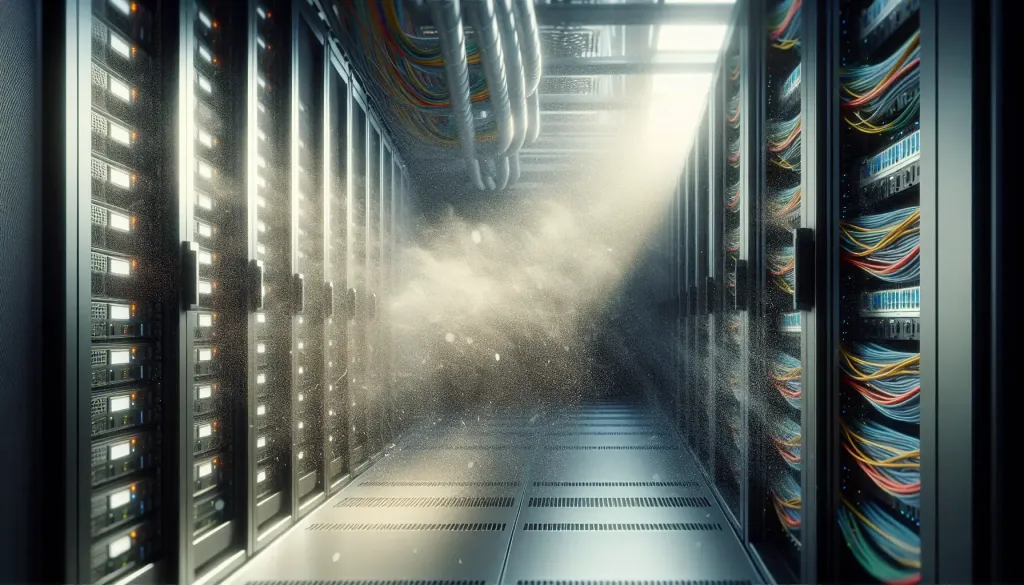
Dust and debris accumulate on data center equipment like any other piece of equipment, but cleaning them is made more difficult due to their delicate components. Dust and ferrous metal particles accumulate on electronic circuit boards, but they cannot be cleaned in the same way as other surfaces. Improper or absent cleaning procedures can lead to further debris buildup, which can lead to overheating and equipment failure. Data center cleaning services are trained to handle these specialized problems.

Removing dust and debris from the air improves the working conditions of your employees and boosts their overall health and morale. Taking the time to ensure your server room is clean demonstrates your concern for the company as a whole and your desire to provide a healthy environment for your employees. With higher morale and fewer sick days, your employees' productivity will increase, boosting your bottom line.

There are many great reasons to choose a data center cleaning service over traditional cleaning services. Here are a few:

1. Protecting Your Technology

Small amounts of particles, such as electrostatic dust, can cause hard drives and tape drives to malfunction. Up to 250 volts of static electricity can cause data loss and damage electrical circuits. Electrostatic dust adheres to the surfaces of your equipment and acts as an insulator, preventing it from cooling when needed. Monitoring the temperature of data center equipment is a delicate process—even a few degrees higher can cause overheating.

You may have strict environmental monitoring practices in place, but neglecting something as simple as vacuuming up dirt and dust can sabotage this hard work. If you notice that your equipment frequently experiences unexplained downtime or malfunctions, a dirty environment may be the culprit.

2. Preventing Contamination

Workers, technicians, and cleaning teams can introduce contamination into a data center if they enter without the proper equipment, or if the center itself is not well-equipped to prevent external contamination. Adhesive mats, shoe covers, and hairnets are a few ways your internal team can reduce contamination before the cleaning team arrives.

Some materials, such as zinc whiskers, may be too small or even microscopic for the human eye to see, meaning you won't clearly see all the contaminants inside the room. These concentrated particles can cause fires and even explosions when they approach heat sources. Furthermore, these contaminants don't necessarily come from within your facility. Many data centers are located in areas with poor outdoor air quality, which can lead to the introduction of pollutants such as vehicle exhaust.

3. Extend the Life of Your Equipment

By using premium data center cleaning services, you'll reduce the contaminants you're worried about, reducing the likelihood of equipment failure. Proper maintenance prolongs the life of your equipment, saving time and resources on costly repairs and replacements.

It's better to manage scheduled downtime for equipment cleaning than to deal with unexpected downtime caused by equipment damage. First Cleaning Services enhances this advantage by working while your equipment is running to avoid downtime.

4. Avoid Costly Mistakes

Cleaning services are a good option for many industries, but they are not adequately equipped to meet the demands of data center cleaning. Data center cleaners undergo extensive and ongoing training to keep up with the latest developments in equipment cleaning techniques and best practices.

Have they received training in compliance with ISO 14644?

Do they use appropriate chemicals, such as antistatic cleaning solutions?

Do they record particle counts before and after cleaning to ensure your data center complies with ISO standards?

Do they provide an environmental report on your data center?

Do they know the appropriate security procedures to keep data safe during access to the center?

Does your data center cleaning company offer national or international cleaning programs to help you reduce costs and increase site efficiency?
Data Center Cleaning Procedure

This overview gives you an overview of typical data center cleaning procedures. Once you understand the process, you can feel confident hiring a team to maintain your facility.

Equipment

Installing IT equipment may involve excavation, which produces metal particles and sawdust. To remove these and other debris, the cleaning team will use a vacuum cleaner equipped with a high-efficiency particulate air (HEPA) filter. According to the Environmental Protection Agency (EPA), a HEPA vacuum can remove 99.97% of materials such as dust, bacteria, mold, and more. This vacuum is often the preferred model for industrial and commercial applications due to its high Minimum Efficiency Rating Value (MERV). DataSpan teams also use ultra-low particulate air (ULPA) filters that remove 99.99% of particles 0.12 microns or larger in diameter.

Flat surfaces, such as windows, rack tops, and doors, will also be vacuumed and wiped down using microfiber cloths and cleaning materials suitable for data centers.

Subflooring

The subfloor of a data center is an ideal place for falling debris and living contaminants, such as insects and rodents. Installing a floor seal prevents particles from entering the server room's cooling system and affecting equipment.

High-efficiency particulate air (HEPA) vacuums are also effective at capturing small particles in this area of the data room. The cleaning team will remove the floor tiles and move the cables for easy access. If there are any cables that are no longer in use—or are showing signs of wear—it may be a good time to remove them to keep the subfloor clean and organized.

Overhead

Dust accumulates when entering a data center without protective clothing, and this dust can also come from ceiling coolers. Falling dust can cover server room surfaces and enter the cooling system. Therefore, ceiling coolers should be cleaned using a vacuum cleaner equipped with a high-efficiency particulate air (HEPA) filter and microfiber cloths. It is recommended to deep clean this area annually.

Raised Floors

Like the rest of the room, raised floors can be cleaned using a high-efficiency particulate air (HEPA) vacuum, anti-static cleaning chemicals, and a dry or wet mop. A dry mop eliminates the need for a traditional vacuum, which stirs up more contaminants and spreads them throughout the data center. If the data center has perforated tiles, they should be removed and cleaned outside the server room to prevent moisture from seeping into the subfloor.

Choose first cleaning services for your data center cleaning services

If you're looking for an experienced company to clean your facility, First Cleaning Services offers professional data center cleaning services to meet all your needs. With years of experience in data center maintenance, we handle everything from surface cleaning to floor sealing.
We understand the impact of a sudden downtime on your business, so we offer comprehensive environmental consultations, customized service appointments, and highly trained experts to help you keep your data center clean and running smoothly.

Contact us today for more information about our specialized cleaning services, or our wide range of other products and services, including air management, energy, and cooling solutions. You can also contact a local representative to hire our cleaning team in your area.

Leave a comment

error: Content is protected !!